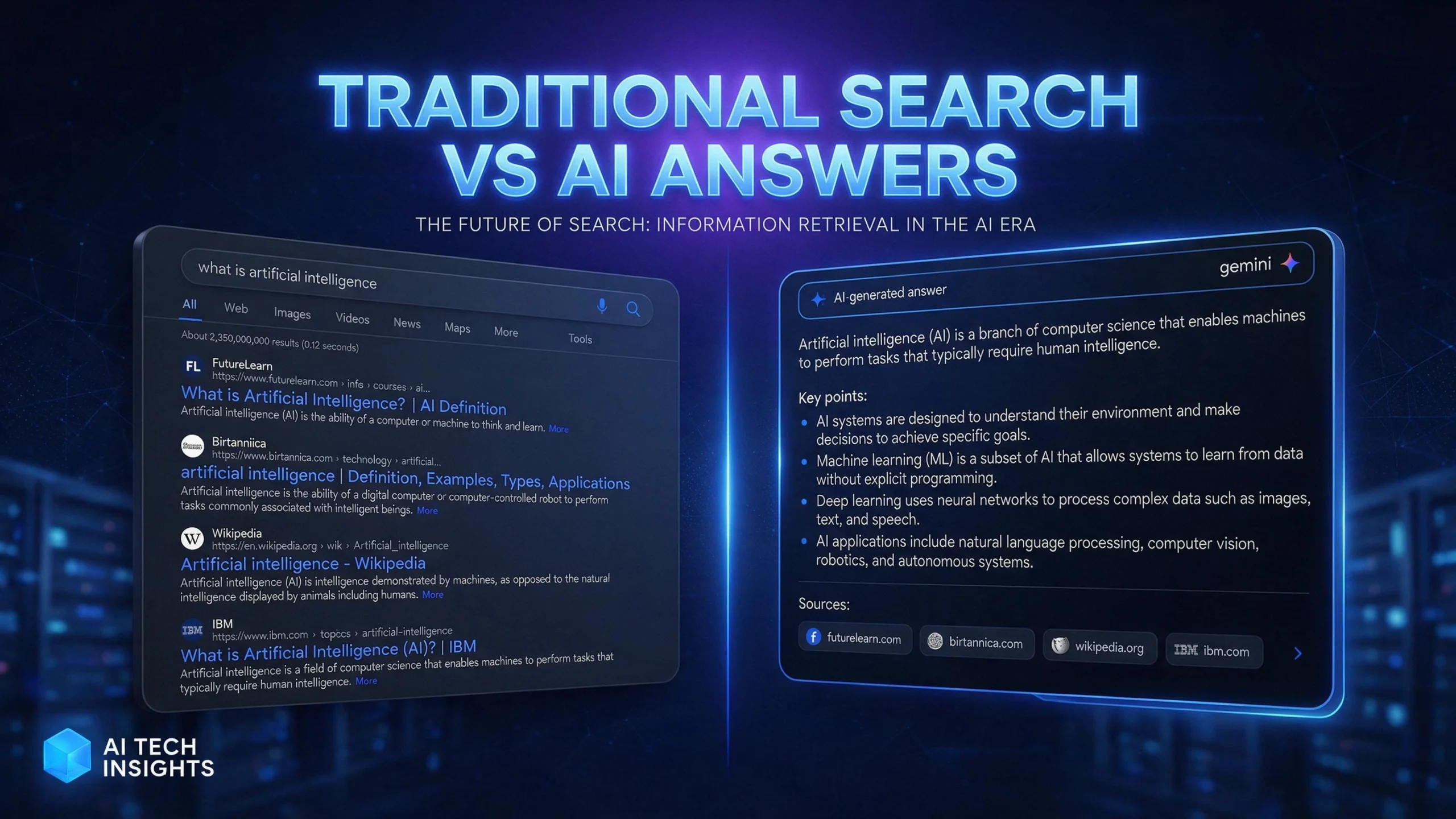
Search is changing fast. People no longer type every question into Google, scan ten blue links, open five tabs, and compare answers themselves. They increasingly ask systems such as ChatGPT, Google AI Overviews, AI Mode, Gemini, and Perplexity to find information, compare options, explain problems, and recommend next steps. These systems can search web sources, retrieve information, synthesize multiple pages, and show links supporting their answers.
That creates new visibility problem for website owners. Ranking in traditional search still matters, but getting mentioned, cited, or used as source inside AI-generated answers is becoming another part of search visibility. This is where Generative Engine Optimization, commonly called GEO, enters picture. GEO focuses on making website content easier for generative search systems to discover, understand, retrieve, trust, and potentially cite.
But there is big misconception here. GEO does not mean adding magic AI markup, stuffing pages with keywords, creating hundreds of AI-written articles, or putting an llms.txt file on website and expecting ChatGPT to send traffic. Google says its existing SEO fundamentals remain foundation for AI search, and specifically says there are no special technical requirements or special schema needed to appear in AI Overviews or AI Mode.
So what should website owners do in 2026? Build website that works well for humans, search engines, and retrieval systems. That means strong technical SEO, useful original content, clear structure, trustworthy information, good internal linking, crawlability, strong page experience, and evidence that goes beyond generic information found on hundreds of competing pages.
What GEO Means
Generative Engine Optimization is broad term for improving website visibility within AI-powered search and answer experiences. Traditional SEO mainly focuses on helping search engines understand page relevance and quality so page can appear for search queries. GEO adds another objective: make information useful and extractable when an AI system retrieves web sources and creates an answer for user.
Think of traditional SEO like getting your shop onto busy street. GEO is making sure, when someone asks guide standing outside street, “Where should I go for this problem?”, guide knows your shop exists, understands what you sell, and has enough trustworthy information to mention it. You still need street, address, signage, reputation, and useful products. GEO does not replace those things.
Research around GEO is still developing. Recent academic work describes generative search visibility as multi-stage process involving discovery, retrieval, reranking, citation, prominence, factual use, and downstream user behavior. That matters because nobody can honestly promise that one optimization trick will make page appear in ChatGPT or another AI engine. Evidence remains more mature for improving retrievability and source quality than for claiming guaranteed long-term traffic gains.
GEO vs Traditional SEO
SEO and GEO overlap heavily. This is important because some marketers present them as completely separate disciplines. They are not.
Google’s current documentation says websites should continue using foundational SEO practices for generative AI features. Pages need to be crawlable, indexable, useful, technically accessible, and eligible for normal Search visibility. Google also recommends making important content available in text, maintaining strong internal linking, providing good page experience, and ensuring structured data matches visible page content.
GEO adds another layer of thinking. Instead of asking only, “Can this page rank for keyword X?” ask questions like:
- Can AI system identify exact answer on page?
- Does page contain original evidence?
- Is information organized around real user questions?
- Does page clearly establish who produced information?
- Are claims supported by data, examples, documentation, or first-hand experience?
- Can search systems understand relationships between pages?
- Does page provide something competitors simply copied from other pages do not?
That shift is small in wording but big in strategy.
Why AI Search Changes Website Visibility
Traditional search gives user list of pages. Generative search can give user synthesized answer before user visits any page. That changes value of being visible.
Suppose someone searches, “How can I improve WordPress LCP without replacing my theme?” Traditional results may show optimization guides, plugin documentation, agency articles, and technical discussions. An AI search system can retrieve several sources, combine their information, explain likely causes, and provide citations.
OpenAI describes ChatGPT search as a way for ChatGPT to retrieve timely web information and provide links to relevant sources. Google describes AI Overviews and AI Mode similarly as systems that can surface links from web sources while helping users explore complicated questions. Google says its AI features can use query fan-out, meaning system may perform multiple related searches across subtopics and sources while building response.
That means one webpage can potentially become relevant for multiple related questions, not only exact keyword it was written around. It also means shallow keyword targeting can become less useful. If page answers one narrow keyword but gives little context, another page with stronger evidence, clearer explanations, and better topical coverage may provide more useful source material.
How AI Overviews Find Website Content
Google says AI Overviews and AI Mode are grounded in Google’s Search systems. Pages need to be indexed and eligible for normal Search snippets to be eligible as supporting links. There are no additional technical requirements specifically required for AI Overviews.
This creates straightforward lesson: do not abandon SEO while chasing GEO.
If robots.txt blocks important resources, canonical tags are wrong, internal links are weak, important content is hidden behind inaccessible interactions, or pages are not indexed, AI visibility becomes harder. Fancy GEO copy cannot rescue broken technical foundations.
Google’s 2026 guidance also emphasizes crawlability, semantic clarity, page experience, unique content, and reducing unnecessary duplicate content.
How ChatGPT Search Uses Web Sources
ChatGPT Search can retrieve current information from web and provide cited links. That means web visibility can matter when user asks question requiring current or niche information.
But there is no reliable shortcut that forces ChatGPT to cite particular domain. Search systems decide which sources to retrieve and use based on query, relevance, available information, and system behavior.
For website owners, practical goal should therefore be simple: become useful source worth retrieving.
Write specific explanations. Publish original findings. Show real examples. Explain technical processes. Add measurements. Document experiments. Answer questions competitors avoid. Keep facts current. Make important claims easy to verify.
Why Traditional SEO Still Matters
GEO does not kill SEO. Google says this directly. Its current guidance says SEO best practices remain relevant because generative AI features are rooted in Google’s core Search ranking and quality systems.
If you are building this foundation from scratch and are not sure where to start, our SEO tips for beginners walk through the fundamental signals Google uses to evaluate pages, including technical health, content relevance, and user experience.
This matters for WordPress businesses especially. Many site owners hear “AI search” and immediately start looking for GEO plugins. That can become distraction. Before worrying about AI citations, check whether site has basic technical health.
Technical SEO Comes First
Start with crawling and indexing. Check robots.txt. Check XML sitemap. Check canonical URLs. Check indexability. Review redirects. Remove accidental noindex directives. Verify important pages can be reached through internal links. Check JavaScript-dependent content. Review duplicate URLs.
Then look at page experience. Mobile layout should work properly. Main content should load quickly. Images should not be unnecessarily large. JavaScript should not block critical rendering. But none of that matters if server response is already slow. A poor hosting environment can undermine everything else.
If you are unsure whether your host is contributing to the problem, our best WordPress hosting reviews compare options based on real performance metrics.
Google’s current AI guidance specifically recommends crawlability, internal linking, good page experience, textual availability of important content, and accurate structured data.
This is where Core Web Vitals still matter. Fast pages do not automatically earn AI citations, but slow, unstable, difficult-to-use websites create poor experience and can also make crawling, rendering, and user engagement harder.
What Makes Content Visible to AI Search
AI systems need information they can retrieve and use. Generic content creates weak signals because thousands of websites may say same thing.
Imagine two articles about WordPress speed. Article A says, “Use caching, optimize images, minify CSS, and use CDN.” Article B documents actual optimization process, including before-and-after LCP, image payload reduction, render-blocking resources, cache configuration, server response time, plugin changes, and measured results.
Which page gives answer system more useful material? Article B contains more concrete evidence.
Google’s current guidance tells site owners to focus on unique, valuable, non-commodity content and warns against treating GEO as collection of hacks.
Original Data and First-Hand Expertise
Original data is powerful because competitors cannot easily duplicate it.
For WordPress performance website, that could mean publishing anonymized optimization case studies. Show what changed. Explain why it changed. Give measured results. Discuss trade-offs. Explain failures too.
For example, instead of publishing another generic article titled “How to Speed Up WordPress,” publish:
“How I Reduced LCP From 6.2s to 1.4s on a WordPress HVAC Website.”
That title targets specific problem. Article can explain page architecture, image handling, CSS, JavaScript, caching, hosting, third-party scripts, and measurement process. It can contain original numbers and practical observations.
This creates content with stronger information density than generic rewritten SEO content.
Clear Answers and Strong Content Structure
AI systems need to understand page meaning. Humans need same thing.
Use descriptive headings. Answer important question directly. Follow answer with explanation, evidence, examples, and implementation details.
Do not hide core answer under 900 words of introduction.
If heading says “Does WebP Improve LCP?”, answer question immediately. Then explain when WebP helps, when it does not, how image dimensions affect performance, how responsive images work, and how to measure result.
Good structure helps reader scan page. It also makes individual concepts easier to retrieve.
That does not mean stuffing every section with artificial question-answer blocks. Google explicitly warns against chasing simplistic GEO/AEO hacks. Focus on useful content structure instead.
Structured Data and GEO
Structured data helps search engines understand page content and entities. Google says structured data can help it understand content and potentially support richer search features.
But there is an important distinction: schema is not GEO magic.
Google’s current AI feature documentation says there is no special schema.org structured data required to appear in AI Overviews or AI Mode. It also says structured data should match visible content on page.
Schema Helps Machines Understand Context
Use appropriate schema where it genuinely represents page.
Organization information can clarify business identity. Person information can clarify author identity. Article markup can describe article. Product markup can describe product. LocalBusiness markup can provide relevant business details where appropriate.
Do not add fake reviews, fake ratings, fake claims, or irrelevant schema because marketer says it helps GEO.
Structured data should reinforce reality already visible on page. It should not manufacture trust.
Website Performance and AI Search
Website speed deserves place inside GEO strategy because AI search still sends people to websites. Getting cited means little if visitor lands on page and waits several seconds for content.
Google recommends good page experience as part of its guidance for generative AI visibility. If you want to understand exactly what slows WordPress websites down and what to fix first, read our full breakdown of why your website’s mobile speed is killing your lead generation, covering LCP, INP, CLS, and WordPress-specific bottlenecks in detail.
For WordPress websites, performance work should go deeper than installing five optimization plugins. Plugin quantity alone does not determine speed. Theme architecture, DOM size, CSS delivery, JavaScript execution, image dimensions, third-party scripts, database queries, hosting response, caching, and page builder output can all contribute.
Why Speed and Crawlability Matter
Think of content as product inside store. Crawlability is open door. Performance is how quickly customer can walk through door and reach product. Content quality is product itself.
You need all three.
If important content cannot be crawled, search systems may not discover it. If page is painfully slow, visitors leave before consuming content. That is why technical SEO, Core Web Vitals, and GEO should not be treated as separate silos.
For WordPress sites specifically, reducing render-blocking resources is one of the highest-impact technical fixes available. Our guide on minifying HTML, CSS, and JavaScript covers practical strategies without breaking functionality.
That is why technical SEO, Core Web Vitals, and GEO should not be treated as separate silos.
How to Optimize Existing Content for GEO
Do not start by generating 100 new AI articles.
Start with existing pages.
Look through Google Search Console. Find pages receiving impressions but weak clicks. Find pages ranking around positions 5 to 20. Find pages with strong traffic but poor conversions. Find articles that answer broad topics but lack original evidence.
Then improve them.
Build Content Around Real Questions
Take one core topic and map questions around it.
For WordPress speed, questions might include:
- Why is LCP slow on mobile?
- What causes high INP?
- Why does WordPress TTFB stay high?
- Does Elementor slow down WordPress?
- Does Cloudflare improve WordPress speed?
- Should unused plugins be removed?
- Why does PageSpeed score change after optimization?
- Why can field data fail while lab score looks good?
Answer each question naturally inside relevant content.
This creates deeper topical coverage without creating hundreds of thin pages.
How to Measure GEO Performance
Measurement remains one of hardest parts of GEO. AI responses can change based on query wording, location, model, search availability, retrieved sources, freshness, and other factors. Recent academic research also highlights variability across generative search systems and separates citation selection from how strongly cited material influences final answer.
Do not promise client “top position in ChatGPT.”
Track observable signals instead.
Search Console and AI Visibility
Google introduced dedicated generative AI performance reporting in Search Console in 2026. Google announced rollout of these insights worldwide by August 31, 2026, providing visibility into impressions associated with generative AI features on Search.
That gives website owners better measurement than guessing from occasional manual prompts.
Also track:
- Organic impressions
- Organic clicks
- Query growth
- Non-branded queries
- Conversions
- Assisted conversions
- Pages gaining visibility
- AI feature impressions where available
- Brand mentions in relevant AI searches
- Referral traffic from AI platforms
- Conversion quality from AI-originated visitors
Run repeated tests for important commercial questions. Do not treat one ChatGPT response as permanent ranking.
Common GEO Mistakes
Biggest mistake is treating GEO as keyword stuffing with new name.
Second mistake is believing AI-written content automatically becomes AI-search-friendly.
Third mistake is creating fake authority through mass publishing.
Why AI-Generated Content Alone Fails
Google allows appropriate use of generative AI, including research and adding structure to original work. But Google warns that generating many pages with AI without adding value can violate its spam policies around scaled content abuse.
This is why “publish 500 AI articles this month” is weak strategy.
AI can help research, outline, classify questions, identify gaps, and improve structure. Human expertise should supply judgment, original experience, evidence, testing, examples, and editorial control.
For ProSpeedGuy, this difference matters. Generic articles about WordPress speed are everywhere. Actual optimization experience is harder to duplicate.
Use that advantage.
GEO Strategy for WordPress Websites
WordPress gives you huge flexibility, but flexibility can create technical mess.
A GEO-ready WordPress website should have clean information architecture, logical URLs, crawlable content, strong internal links, optimized media, stable templates, good performance, accurate schema, and content written around genuine user problems.
If your WordPress website is missing that technical foundation, our WordPress speed optimization services are built to fix the bottlenecks that affect both user experience and search visibility.
Practical WordPress GEO Checklist
Start with technical foundation:
- Check indexability.
- Review robots.txt.
- Validate XML sitemap.
- Fix canonical issues.
- Improve internal linking.
- Remove unnecessary duplicate URLs.
- Make key content available as crawlable text.
- Optimize mobile experience.
- Improve Core Web Vitals.
- Reduce unnecessary JavaScript.
- Optimize images.
- Keep structured data accurate.
- Monitor Search Console.
- Update outdated content.
- Add original evidence to important articles.
Then build topical authority.
Create content clusters around services. For example, WordPress speed can connect to Core Web Vitals, LCP, INP, CLS, caching, image optimization, CDN, hosting, Elementor performance, WooCommerce performance, and technical SEO.
Each article should connect naturally to related service and supporting pages.
GEO for Local Businesses
Local businesses have another advantage: real-world information.
A local company can publish location-specific expertise, services, project examples, customer questions, service areas, opening information, original photographs, case studies, and useful local context.
Google’s generative AI guidance includes local content among areas where websites can provide useful information.
For a local WordPress agency, avoid creating 50 nearly identical city pages with only city name changed. Build pages with genuine local value.
Explain projects completed for businesses in the region. Discuss local customer problems. Publish service-specific examples. Keep Business Profile information accurate. Connect location pages with relevant services.
AI systems need information. Real local experience gives you information competitors cannot easily copy.
GEO for Ecommerce Websites
Ecommerce GEO has another challenge: products change.
Price changes. Inventory changes. Specifications change. Reviews change. Offers expire.
That means product information must stay accurate and pages must load quickly enough for users to act. If you run a Shopify store, our Shopify speed optimization guide covers ecommerce-specific performance fixes that also support better crawlability and user experience.
Use clean product data, descriptive product content, accurate structured data, high-quality images, useful comparison information, shipping details, return information, and clear availability signals.
Do not write 1,000 words of generic marketing copy for every product.
Give users information that helps decisions.
For example, a laptop page should explain processor, RAM, storage, display, battery, dimensions, ports, compatibility, warranty, and practical use cases. A product comparison page should clearly distinguish models instead of rewriting manufacturer descriptions.
Google’s current generative AI guidance specifically includes shopping content among areas website owners should consider when optimizing for AI experiences.
GEO and Core Web Vitals
Core Web Vitals do not become “GEO ranking factors” simply because AI search exists. Avoid that claim.
But performance still matters.
Google’s AI search guidance recommends good page experience and foundational SEO practices.
For WordPress sites, focus on real user experience rather than chasing PageSpeed score alone.
LCP tells you about the loading performance of the main content. INP measures responsiveness. CLS measures visual stability. Before worrying about AI citation scores, understand what these numbers actually mean for real users; our guide on why PageSpeed scores don’t matter as much as most people think explains exactly that.
A website can score well in Lighthouse and still have poor real-world field data. Conversely, a technically complex page may have acceptable real-user performance despite mediocre lab conditions.
Use both lab and field data where available.
GEO, Internal Linking and Topical Authority
Internal linking is an old SEO tactic with new importance.
When related pages link together using meaningful context, search engines can better understand relationships between topics. Users can also move naturally from broad educational content toward detailed guides and commercial pages.
Imagine website architecture like a city map.
One isolated article is a small village. Twenty connected articles covering one subject form a city. Internal links become roads. Service page becomes business district. Case studies become proof. Technical guides become infrastructure.
Do not link every page to every other page.
Build logical clusters.
For example:
WordPress Speed Optimization
→ Core Web Vitals Guide
→ LCP Optimization
→ INP Optimization
→ CLS Fixes
→ Elementor Speed
→ WooCommerce Speed
→ Image Optimization
→ CDN Configuration
→ WordPress Caching
→ Speed Optimization Case Studies
That structure gives users and search systems clearer context.
GEO and Conversion Optimization
Traffic is not final goal.
A page can receive 10,000 visitors and produce almost no business. Another page can receive 300 highly relevant visitors and generate multiple qualified leads.
This is why GEO should connect with conversion optimization.
AI search users often arrive after asking specific questions. They may already understand their problem.
If you are losing those visitors after they arrive, our guide on 5 CRO fixes that can double your website leads covers exactly where most websites lose those conversions.
If visitor arrives after searching “why is my WordPress LCP 5 seconds on mobile?”, generic homepage messaging wastes opportunity.
Create relevant next step.
Show technical explanation. Show case study. Explain process. Show evidence. Give clear contact option.
Do not force visitor through five pages before finding service.
Content should educate and move naturally toward action.
How Long Does GEO Take to Work?
No honest SEO specialist can give a universal timeline.
Google does not guarantee crawling, indexing, ranking, or inclusion in AI features even when technical requirements and best practices are satisfied.
AI visibility also varies by platform and query.
One article may become useful quickly because it answers new question with little competition. Another may take months because many established sources already cover topic.
Focus on measurable improvements instead of arbitrary promises.
Track indexation. Track impressions. Track query coverage. Track citations or mentions where measurable. Track organic traffic. Track leads.
Then improve content based on evidence.
Should You Hire a GEO Specialist?
Depends on the website.
Small site with strong technical foundation may not need separate GEO specialist. Existing SEO process can incorporate most useful GEO practices.
Larger website may need deeper work across content architecture, technical SEO, entity clarity, structured data, analytics, content production, conversion optimization, and AI visibility measurement.
For WordPress businesses, technical expertise matters because content cannot compensate for a broken foundation.
A specialist should be able to explain what is being changed, why it matters, how success will be measured, and what evidence supports the recommendation.
If you want to talk through your website’s GEO and technical SEO foundation, book a free call and we will walk through it together.
Be cautious around anyone promising guaranteed ChatGPT citations, guaranteed AI Overview placement, secret AI ranking signals, or a special markup that supposedly forces AI engines to recommend a website.
Google itself says there are no special optimizations or special schema requirements for inclusion in AI Overviews or AI Mode.
Conclusion
GEO is not a replacement for SEO.
It is better understood as another way of thinking about website visibility in search systems that increasingly retrieve, synthesize, and cite information instead of simply displaying lists of links.
Best strategy in 2026 is not to chase every new AI-search hack. Build website that deserves to be found.
Make content original. Make answers clear. Publish first-hand evidence. Keep technical SEO clean. Improve page experience. Keep information current. Not sure where your website currently stands? Start with a free website review and we will identify the biggest technical and content gaps holding your visibility back.
Make important content crawlable. Build strong internal links. Use accurate structured data. Improve page experience. Keep information current. Measure what can be measured.
For WordPress websites, this creates useful overlap between technical SEO, Core Web Vitals, content strategy, conversion optimization, and AI search visibility.
That is good news.
You do not need separate website for Google and AI engines. You need better website.
Google’s own current guidance makes same point: foundational SEO remains relevant, unique and valuable content matters, and site owners should avoid simplistic GEO hacks in favor of effective SEO and useful content.
AI search may change how people discover businesses. It does not change basic rule of web visibility: be useful, be accessible, be trustworthy, and give people something worth finding.
FAQs
1. Is GEO replacing SEO?
No. GEO and SEO overlap heavily. Google says existing SEO fundamentals remain relevant for AI Overviews and AI Mode. Technical accessibility, crawlability, indexing, useful content, internal linking, and good page experience remain important.
2. Do I need special schema for ChatGPT or Google AI Overviews?
No special schema is required for Google AI Overviews or AI Mode. Google specifically says there is no special schema.org structured data needed for these AI features. Structured data should accurately represent visible page content.
3. Does llms.txt guarantee AI search visibility?
No. Google explicitly says site owners do not need to create new machine-readable files or special AI files to appear in its AI features. Focus on crawlability, useful content, technical SEO, and clear information instead.
4. Can AI-generated content rank in Google?
AI-generated content can be used, but mass production of pages without meaningful added value can create spam-policy problems. Google says generative AI can help with research and structure, but content should meet Search Essentials and spam policies and provide value for users.
5. How can I improve my website’s GEO visibility?
Start with technical SEO and content quality. Make pages crawlable and indexable, improve internal linking, answer real questions clearly, publish original data and first-hand experience, maintain accurate structured data, improve page experience, and monitor Search Console. Google now provides generative AI performance reporting for visibility within its AI search experiences.
Want to improve WordPress speed, Core Web Vitals, technical SEO, and AI-search visibility on your website? Start with technical foundation before chasing GEO hacks.