From 71 to 15 —
Legacy WordPress,
modernized underneath.
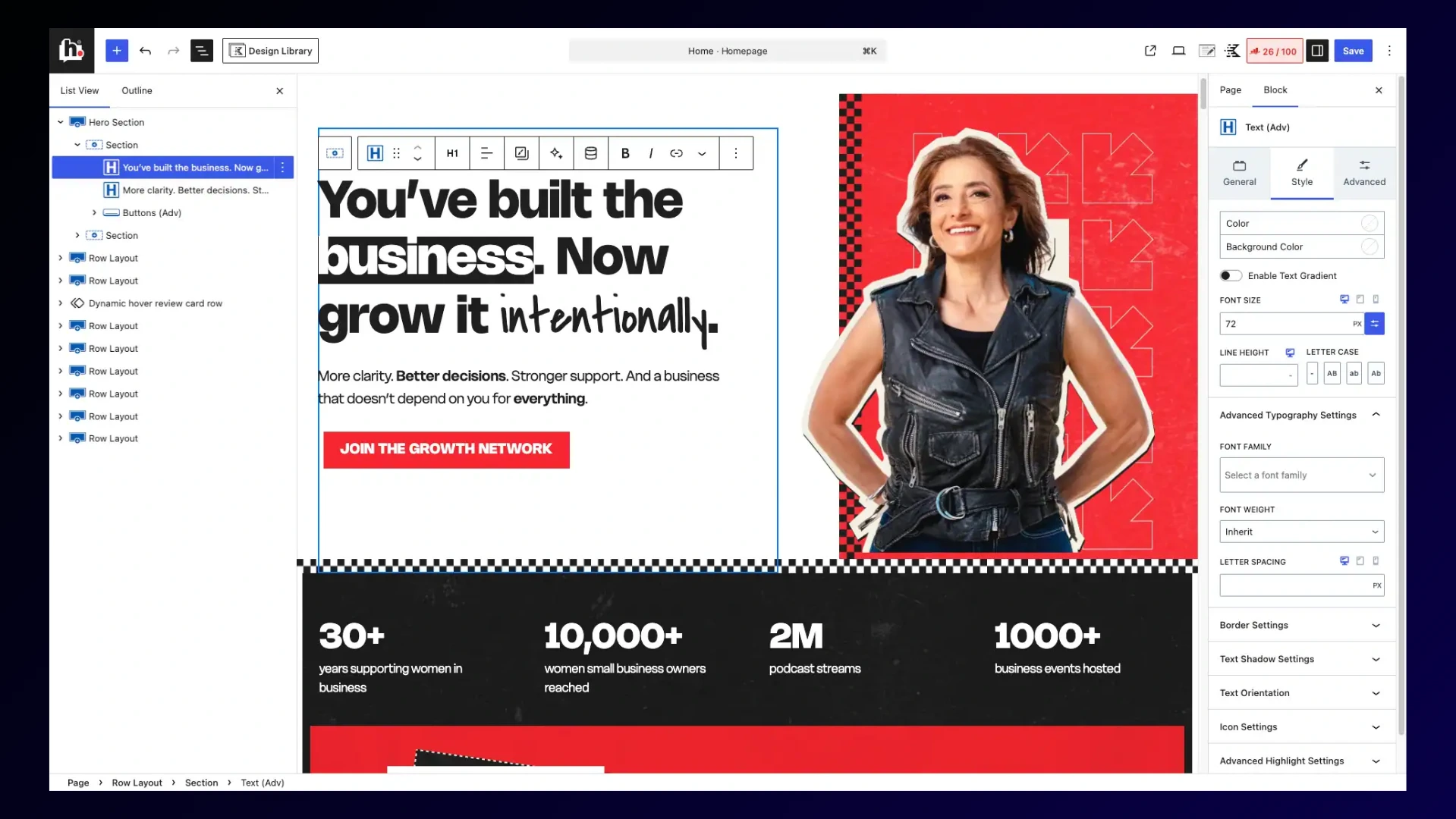
HerBusiness ran on 71 active plugins and legacy PHP that turned every update into a coin flip — and every layout change into a 24–48 hour developer ticket. The fix wasn’t a redesign. It was a foundation: +60% faster loads, 98/100 SEO health, 100% of the visual identity preserved.
Active Plugins · 56 Consolidated
Same Website. New Foundation.
HerBusiness
A long-running national network and publishing platform for women in business — daily articles, an extensive podcast archive, and member resources serving thousands of readers every week. The content operation outgrew the codebase years ago; nobody could afford the downtime to fix it.
The site had accumulated years of custom development: 71 active plugins, hardcoded templates, legacy widgets, and PHP written for a different decade. Routine WordPress or server updates could crash individual sections — so updates simply stopped happening, and the risk compounded.
The tax of technical debt. When a simple layout change costs your team 24–48 hours via a developer — and a plugin update rolls dice with the production site — marketing isn’t slow. The infrastructure is.
- Client
- HerBusiness
- Industry
- Membership & Publishing
- Platform
- Kadence Pro + Gutenberg + ACF
- Plugins
- 71 → 15
- Page Load
- +60% improvement
- SEO Health
- 98/100
- Result
- Infrastructure Modernized
A Thriving Business.
A coin-flip website.
Nothing about the front-end looked broken — that was the danger. Underneath, years of plugin sprawl and legacy PHP had made the site’s own maintenance its biggest operational risk.
| Area | Before | Why It Mattered | Status |
|---|---|---|---|
| Active Plugins | 71 | Overlapping deps, update roulette | Critical |
| Layout & Content Edits | 24–48 hrs | Developer required for every change | Critical |
| PHP Environment | Legacy deps | Deprecated hooks blocked PHP 8.x | Failing |
| Templates | Hardcoded | Layouts & author info baked into PHP | Poor |
| SEO Structure | Drifted | Weak semantics, messy URLs | Poor |
| Data Health | Legacy data | No safe path to clean or migrate | Risky |
Findings from the full pre-project infrastructure audit — plugins, hooks, templates, database and URL structure.
5 Structural Faults.
Systematically fixed.
-
Fault 01 — Plugin Sprawl71 Plugins, Enormous Functional Overlap
Single-purpose plugins had accumulated over years: three SEO helpers, two social sharers, four slider libraries, abandoned components untouched for updates. Every dependency increased the blast radius of every update — so updates stopped, and the debt compounded.
71 active · 56 removable -
Fault 02 — Hardcoded Content ArchitectureLayouts, Author Info & Widgets Baked Into PHP
Page layouts, profile blocks, and custom components lived in legacy templates and widgets — invisible to the editor. Marketing staff could not modify them at all; a headline move or layout tweak became a developer ticket with a 24–48 hour turnaround.
24–48h per edit -
Fault 03 — Deprecated PHP & HooksLegacy Code Blocking PHP 8.x
Custom PHP relied on deprecated hooks and outdated dependencies. The environment couldn’t safely move to modern PHP, which meant the hosting stack itself was becoming a ceiling — and every passing WordPress core release widened the gap.
PHP 8.x blocked -
Fault 04 — No Data Migration PathLegacy Data Structures With No Safe Tooling
Years of podcast metadata, profile records, legacy content fields and external media had no cleanup path. One-shot migration scripts on a production-scale database meant timeouts and risk — the kind of job that simply never gets scheduled.
timeouts + DB risk -
Fault 05 — URL & SEO DriftMessy URLs, Pagination Strings & Weak Semantics
Author content lived under legacy /author/ URLs while a new /profile/ structure was needed. Pagination polluted visible URLs with query strings — ?pg=2, ?paged=2 — and heading semantics had drifted, quietly undermining how search engines understood the site’s structure.
URL debt
Four Phases. One Rule:
don’t touch the design.
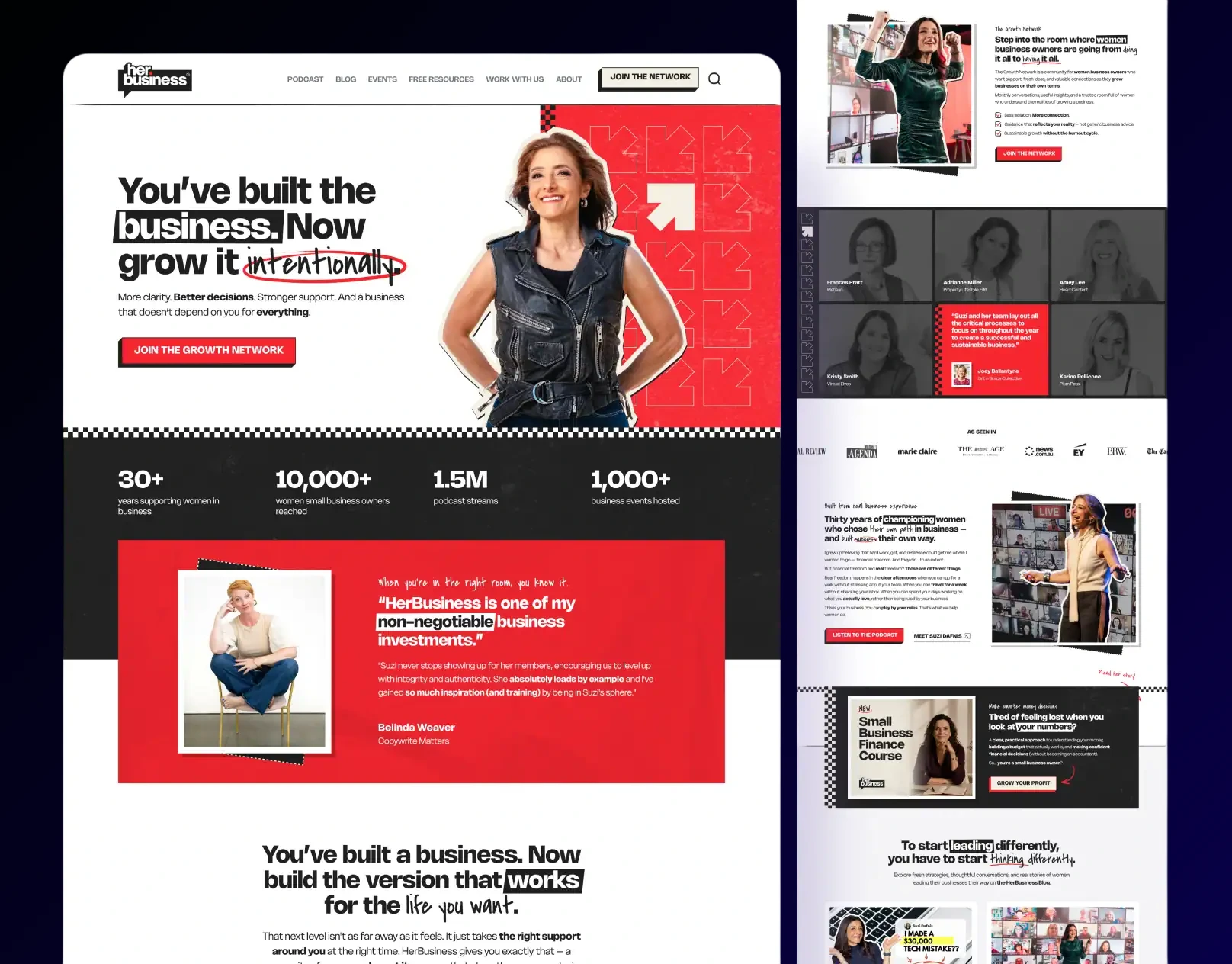
Modernize the infrastructure, reduce the technical debt, hand the keys to the internal team — while visitors never notice a pixel change on the front end.
- Full audit of all 71 plugins — needed, overlapping, abandoned
- Site rebuilt around WordPress + Kadence + Gutenberg
- Hardcoded PHP layouts rebuilt as native editable blocks
- 56 plugins removed or consolidated; duplicates eliminated
- Staged environment for every change — production never touched
- Legacy PHP refactored; custom templates reworked for modern WordPress
- Semantic HTML cleaned up across templates
- One dedicated suite replacing scattered plugins: audio player, search & filtering, social sharing, AJAX interactions, pagination handling
- Custom JS controlling Kadence infinite-scroll behavior
- History API removes ?pg=2 and ?paged=2 from visible URLs
- Podcast title sanitization across the archive
- Legacy content mapped into structured ACF fields
- External media downloaded into the WordPress Media Library
- Profile data migrated; legacy user structures remapped
- Rank Math metadata managed + redirect processing — all in timed batches, no timeouts, no production risk
- Heading structure, metadata handling and internal URL architecture cleaned
- /author/example → /profile/example — permanent redirects preserving URL equity
- Search-engine-friendly pagination behavior implemented
- Staged rollout with zero downtime and zero visual changes
- Update path documented; admin training so marketing owns the editor
Before vs. After — under the hood.
Drag the gold handle to compare the plugin stacks, row for row.
Production
15 Active
- SEO suite — Rank Math
×1 - Layout — Kadence Pro
×1 - Structured fields — ACF
×1 - Custom functionality suite
×1 - Utility & maintenance plugins
×11
Update path: routine — modern hooks, PHP 8.x ready, documented dependencies
Legacy
71 Active
- Overlapping SEO plugins
×3 - Slider / carousel libraries
×4 - Duplicate social sharing tools
×2 - Abandoned — no updates > 2 yrs
×6 - Single-purpose one-offs
×56
Update path: roulette — deprecated hooks, overlapping dependencies, unknown blast radius
| Metric | Before | After | Improvement |
|---|---|---|---|
| Active Plugins | 71 | 15 | −56 Consolidated |
| Page Load Performance | Baseline | +60% Faster | Stack-wide gains |
| SEO Health | Unmeasured | 98 / 100 | Technical cleanup |
| Layout Edit Turnaround | 24–48 hrs | Minutes | ~10× Admin Speed |
| PHP Environment | Legacy deps | PHP 8.x Ready | Updates made safe |
| Content Editing | Developer only | Native blocks | Marketing-owned |
What Changed Once
the Debt Was Gone
Layout and content changes no longer queue behind a developer’s diary. Staff edit, rearrange and publish natively in Gutenberg — work that used to take 24–48 hours now ships the same morning.
24–48h → minutes
Fifteen clean plugins, modern hooks and PHP 8.x compatibility turned maintenance from project-risk into routine hygiene. Core, plugin and server updates now happen on schedule — not after a recovery plan.
maintenance: routine
Removing plugin overhead and cleaning the frontend structure delivered a substantial page-load improvement — with zero redesign. The brand their audience knows is untouched; it simply arrives faster.
+60% page load
Profile URLs were remapped /author/ → /profile/ via permanent redirects, keeping years of backlinks working. Cleaner semantics, headings and metadata delivered a 98/100 technical SEO health score.
98/100 · /author/ → /profile/
In Their Own Words
“Sometimes in Business you come across a supplier that does everything they say they will. On budget, on time and with a level of professionalism and skill you wish was the standard! Thank you pro team for the amazing work you did on our website. We are grateful and could not recommend you highly enough.”
Services Used in This Project
Is Your WordPress Site
Hiding Technical Debt?
We’ll audit your plugin stack, PHP environment and content architecture — and show you exactly what’s fragile, what it’s costing, and how to fix it without a redesign. No pitch. Just data.